
Santa Maria Mold Remediation
Our region's cool coastal humidity creates prolonged damp indoor conditions where unaddressed plumbing leaks can cultivate active mold colonies within 24 to 48 hours. Our certified technicians isolate contaminated zones and remove structural growth safely before airborne spores spread. We target hidden moisture reservoirs to keep your home healthy, protected, and fully restored.
Call (805) 555-0163.
Prefer to talk? (805) 555-0163
Local Containment And Remediation Experts
Our crew brings years of direct field experience remediating fungal growth throughout older valley neighborhoods like Orcutt and Betteravia.
About 65% of housing units locally (19,283 of 29,860) were built before 1980, the period when asbestos-containing materials and lead paint were still in use.
When dealing with these vintage building assemblies, our technicians pair environmental safety protocols directly with our complete emergency water damage mitigation services.
Homeowners often describe how dark spotting and fungal growth on crawl space framing lead homeowners to question whether the issue is cosmetic surface mildew or progressive structural wood decay.
We resolve that uncertainty on every project by conducting thorough physical moisture mappings and structural core assessments before starting tear-outs.
Every member of our team treats your living space with pristine cleanliness standards, maintaining rigorous dust controls from arrival to final sign-off.
Step-by-Step Containment And Removal
We follow a disciplined remediation sequence designed to eliminate active contamination while protecting clean living quarters.
- Thorough Moisture Assessment. We map structural dampness across subfloors and framing, especially when drying out standing crawl space water beneath structural subflooring is necessary to locate the original moisture trigger.
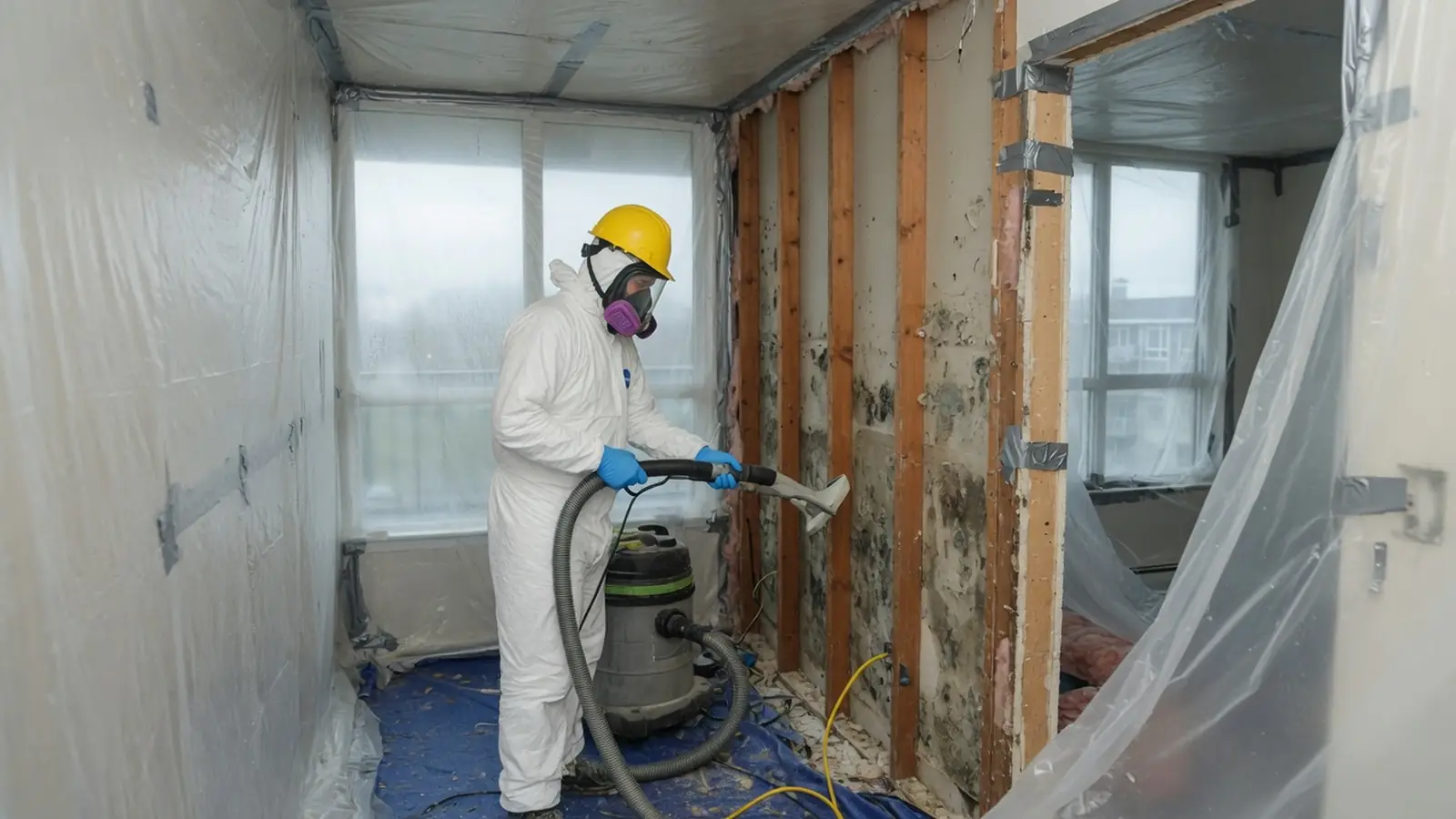
- Isolation And Negative Air Setup. Professional mold remediation requires isolating work zones under negative air pressure with HEPA filtration before technicians tear out contaminated drywall or trim.
- Selective Material Removal And Deep Cleaning. Technicians bag compromised porous wallboards under sealed containment and mechanically abrade embedded framing members to clear deep fungal root structures.
- HEPA Vacuuming And Antimicrobial Sealing. After micro-cleaning all exposed studs, we apply commercial EPA-registered sealants and run continuous air filtration until indoor particle counts return to baseline.
Transparent Remediation Standards
We maintain strict transparent pricing without high-pressure contract tactics. A pattern echoed in public discussions is that homeowners entering remediation agreements express concern over signing assignment of benefits forms that could lead to out-of-pocket balance billing beyond policy sub-limits. We never force complicated claim assignments or hidden surcharge clauses, whether addressing common moisture intrusions or recovering structural interiors after severe storm damage. Our crew works directly with you, providing comprehensive itemized scopes, certified negative air equipment, and verified clearance standards to protect your investment.
Attic And Sheathing Decontamination
Bathroom exhaust fans improperly venting moisture into attic spaces cause extensive, undetected mold colonies across roof sheathing and rafters. We correct the venting pathway, isolate the attic envelope, and clean timber surfaces thoroughly.
Structural Framing Remediation
Why does spraying household bleach on visible mold fail to eliminate fungal root structures embedded deeply within porous framing timber? Surface bleach leaves deep hyphae intact within the wood grain, which is why our technicians use mechanical abrasion and penetrating biocides instead.
Independent Clearance Verification
Homeowners receiving expensive quotes for containment and air scrubbing often question the necessity of extensive remediation scope and seek independent hygiene assessments. We welcome third-party industrial hygienists to verify that our containment barriers and air scrubbing protocols meet rigorous post-remediation standards.
Our Commitment To Certified Remediation
We approach every mold cleanup with rigorous structural containment, advanced negative air filtration, and thorough source elimination. Our technicians ensure hidden dampness is tracked down and eradicated before restoration begins, providing lasting peace of mind.
- 10Zip Codes Served
- 4Service Areas
- 3Services Offered
Read verified feedback from local property owners who trusted our specialists to contain active spore outbreaks, treat contaminated structural framing, and restore healthy indoor air.
“Our written containment proposal arrived with every labor hour and HEPA filter clearly itemized, and the final bill matched it down to the exact dollar. The crew never attempted to sneak in surprise disposal surcharges or equipment line items after tearing out the moldy baseboards. Dealing with a contractor who genuinely honors their initial number was such a relief.”
Marcus B.
“Watching how tightly they sealed the plastic containment zippers and zippered access corridors showed me their incredible attention to clean detail. When they finished sanding the floor joists and sealing the subfloor seams, the wood surfaces were smooth and completely free of residual staining. They left our lower level cleaner than it was before the mold issue started.”
Elena V.
“I passed their contact information directly to my brother-in-law two streets over when he noticed damp odor issues beneath his hall bathroom. The team treated our home with tremendous care, eradicating the spores in our attic without spreading dust anywhere into the bedrooms. He called them the following morning and had the identical great remediation experience.”
Devon K.
“During the drywall removal stage behind our laundry sink, the technicians uncovered an old disconnected cast-iron vent line that was still dripping condensation inside the wall cavity. Instead of halting the project or panicking, the crew capped off the rogue line cleanly, treated the hidden framework, and stayed right on schedule. Their calm troubleshooting turned what could have been a nightmare into a non-issue.”
Clara S.
Frequently Asked Questions
Why does spraying bleach fail to eliminate mold on wood framing?
Bleach cannot penetrate porous wood framing, leaving the fungal root structure alive beneath the surface to regenerate quickly in damp air. Why does spraying household bleach on visible mold fail to eliminate fungal root structures embedded deeply within porous framing timber? Chlorine remains on the surface while water soaks in, feeding the roots. We use mechanical sanding, wire brushing, and EPA-registered botanical antimicrobials instead.
How fast does mold develop after an indoor water leak?
Mold spores can germinate and form active indoor colonies within 24 to 48 hours when persistent moisture remains unaddressed in coastal air. Our cool coastal humidity creates prolonged damp indoor conditions where unaddressed plumbing leaks can cultivate active mold colonies within 24 to 48 hours. Prompt physical extraction and structural dehumidification are essential to prevent structural contamination.
Why is negative air containment necessary during remediation?
Negative air containment isolates contaminated rooms under continuous HEPA exhaust to stop toxic spores from migrating into clean living areas. Professional mold remediation requires isolating work zones under negative air pressure with HEPA filtration before technicians tear out contaminated drywall or trim. Homeowners receiving expensive quotes for containment and air scrubbing often question the necessity of extensive remediation scope and seek independent hygiene assessments, but containment prevents cross-contamination across the entire house.
What causes severe mold to spread across attic rafters?
Attic mold is primarily caused by disconnected bathroom exhaust fans venting warm, humid air directly into unconditioned roof sheathing cavities. Bathroom exhaust fans improperly venting moisture into attic spaces cause extensive, undetected mold colonies across roof sheathing and rafters. We seal the timber surfaces and ensure exhaust ducts vent entirely outside the roof line.
Should I sign an assignment of benefits form for mold remediation?
Avoid signing open assignment of benefits agreements that transfer billing rights, as they frequently expose property owners to surprise costs. Homeowners entering remediation agreements express concern over signing assignment of benefits forms that could lead to out-of-pocket balance billing beyond policy sub-limits. We provide direct, transparent estimates and work cooperatively with your insurance adjuster without asking you to sign away legal claim rights.