
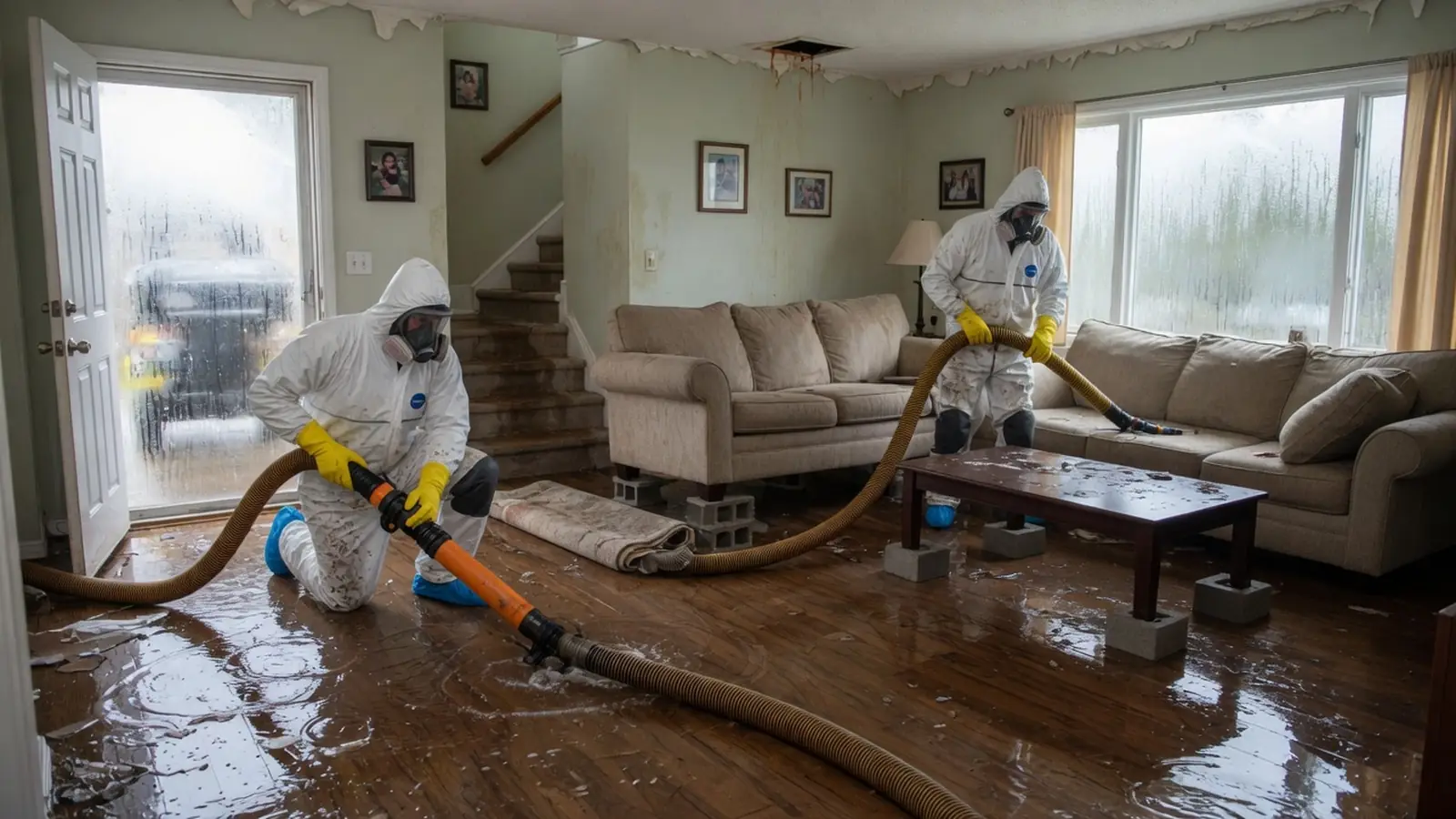
Emergency Water Damage Restoration Santa Maria CA
Winter atmospheric rivers in the coastal valley often deliver intense rainfall that overwhelms aged roof flashings and exterior drainage before structural leaks are noticed. When indoor flooding threatens structural framing, our certified crews respond swiftly with industrial water extractors and commercial air movers. We halt moisture progression immediately to protect residential and commercial properties from severe secondary rot.
For a burst line that's still running, call (805) 555-0163.
Prefer to talk? (805) 555-0163
Structural Water Extraction And Moisture Control
Our field technicians bring years of hands-on structural mitigation experience to every flooded property.
When severe weather compromises your property envelope, our technicians respond immediately to halt secondary damage.
About 16% of housing units in the area (4,849 of 29,860) were built before 1960, the era of galvanized steel supply lines and cast iron drains prone to sudden ruptures.
About 14% of housing units locally (4,075 of 29,860) were built in the 1960s, overlapping the years aluminium branch wiring was installed, requiring strict electrical safety protocols during standing water removal.
About 35% of housing units in the district (10,359 of 29,860) were built in the 1970s and 1980s, overlapping the years polybutylene supply piping was commonly installed.
About 65% of housing units across our community (19,283 of 29,860) were built before 1980, the period when asbestos-containing materials and lead paint were still in use.
We deploy precision moisture meters and calibrated thermal imaging cameras to verify that every wall cavity is thoroughly dried.
Our Four-Stage Structural Dry-Out Protocol
We systematically eliminate hidden moisture using commercial desiccant dehumidifiers and high-velocity air movers. Homeowners frequently observe that damp coastal soil and humid air cause persistent musty odors inside the home, prompting owners to evaluate full crawl space encapsulation and dehumidifier installation. Our remediation specialists swiftly stabilize structural framing and resolve standing crawl space water accumulation to prevent long-term dry rot.
- Emergency Containment And Envelope Sealing. Storm damage restoration begins with emergency exterior tarping and board-up to prevent continued water intrusion before crews deploy high-volume drying equipment inside. Securing broken windows and roof breaches immediately stops additional rainwater from entering the building.
- Bulk Water Extraction And Pressure Relief. As homeowners often report during violent squalls, heavy storm winds driving rain through roof penetrations cause ceiling drywall to sag and fill with water, presenting immediate structural collapse concerns. We drain pooled water safely and use truck-mounted extractors to remove standing fluid from carpets and subfloors.
- Thermal Moisture Mapping And Airflow Placement. Regional weather archives note NOAA radar recorded 1 hail signatures within about 15 miles between 2021-2025 (2021: 0, 2022: 0, 2023: 1, 2024: 0, 2025: 0), underscoring the risk of roof impact leaks. We position industrial centrifugal blowers and low-grain refrigerant dehumidifiers according to infrared imaging data.
- Structural Verification And Sanitization. Technicians record daily psychrometric dry-down logs until structural wood and drywall reach baseline moisture percentages. We apply EPA-registered botanical antimicrobials across treated cavities to ensure complete biological safety.
Our Workmanship Standard And Honest Billing Guarantee
A pattern echoed in public discussions is that homeowners entering remediation agreements express concern over signing assignment of benefits forms that could lead to out-of-pocket balance billing beyond policy sub-limits. We operate under direct, transparent pricing where you retain total control of your insurance claim without confusing third-party assignment clauses. Every restoration project follows strict IICRC standards, and clients can learn more about structural antimicrobial sanitization to verify our rigorous containment protocols.
Storm Damage Roof And Ceiling Dry-Out
The heaviest recent hail year in the regional vicinity was 2023, with 1 radar hail signatures inside a 15-mile radius, leaving compromised exterior envelopes susceptible to heavy driving rains. We extract water from compromised attics, stabilize water-logged drywall, and dry ceiling framing before rot develops.
Burst Pipe And Supply Line Flooding
Aging domestic plumbing lines can fail without warning, releasing hundreds of gallons into finished walls and flooring. We utilize deep-injection drying systems and weighted extraction mats to dry hardwood and subflooring in place.
Attic And Cavity Moisture Remediation
In residential structures, bathroom exhaust fans improperly venting moisture into attic spaces cause extensive, undetected mold colonies across roof sheathing and rafters. We seal bypasses, install negative air machines with HEPA filtration, and sanitize structural wood.
Dedicated Rapid Restoration Protocols
Our water remediation technicians follow rigorous industry procedures to extract moisture, sanitize building materials, and restore healthy living environments without delay.
- 10Zip Codes Served
- 4Service Areas
- 3Services Offered
Read honest feedback from local homeowners who experienced unexpected indoor flooding and relied on our prompt, professional structural drying services.
“A flash flood blocked our driveway during the storm, which kept their service trucks from pulling right up to the house. The crew carried portable extraction units across the muddy yard on foot and still finished drying the soaked drywall ahead of schedule. Their quick adjustment prevented our baseboards from rotting completely.”
Marcus R.
“My elderly mother uses a walker, so having noisy air movers and heavy cords running through the hallway worried us. The team neatly taped down every power line and routed the containment barriers to keep her path to the bathroom clear and safe. They were exceptionally considerate of her comfort while running the dehumidifiers.”
Elena V.
“We almost chose a lower estimate from a local handyman who claimed we just needed surface fans for the flooded subfloor. This company showed us the hidden pockets of moisture trapped behind our cabinets with an infrared camera and properly extracted every drop. Spending a bit more saved us thousands in structural rot later on.”
Julian T.
“Because our house was built in the late 1960s, cutting out wet wallboard required strict lead and asbestos containment protocols. The crew documented every containment seal perfectly for our municipal inspector, allowing the sign-off to pass on the very first visit. That careful attention to local environmental codes kept our rebuild on track.”
Corinne B.
Frequently Asked Questions
How quickly should professional water damage mitigation begin after a flood?
Emergency water mitigation should begin within 24 to 48 hours to stop irreversible structural swelling and prevent hazardous microbial growth. Delaying extraction allows water to wick vertically into interior wallboard, saturating base plates and compromising the structural stability of framing.
Can storm water penetrate behind exterior stucco walls and attic insulation without showing immediate surface stains inside the home?
Yes, wind-driven moisture can saturate exterior stucco sheathing and attic insulation for weeks before indoor drywall discoloration becomes visible. Water traps behind exterior weather barriers, migrating slowly along wall studs where only non-invasive moisture meters and thermal cameras can detect it.
How long does the structural drying process typically take?
Complete structural drying typically requires three to five days depending on water volume, ambient humidity, and the density of affected materials. Crews monitor daily moisture reduction using calibrated meters, keeping air movers and commercial dehumidifiers running until wood reaches safe moisture equilibrium.
Will homeowner insurance cover emergency water damage extraction?
Most standard homeowner insurance policies cover sudden and accidental water discharges, provided mitigation efforts begin promptly after discovery. Policies generally require property owners to take reasonable steps to prevent secondary damage, making emergency extraction and drying an approved claim expense.
Do I need to sign an assignment of benefits contract to start restoration?
No, you do not need to sign an assignment of benefits form to receive immediate, professional emergency water extraction and drying services. Working directly with a transparent restoration contractor allows you to retain total authority over insurance negotiations while avoiding unexpected balance billing.